
At a Glance
Thinking about porcelain veneers in Burien?
Porcelain veneers cover the front of chipped, stained, worn, or uneven teeth to change their color, shape, and spacing. Dr. Daniel La Rota and Dr. Jonathan Everett plan each case with photos and digital scans, and treatment usually takes two to three visits. Because a thin layer of enamel is removed, veneers are permanent, and they generally cost $900 to $2,500 per tooth. Call (206) 242-1500 or book online for a smile consultation.
Got a chipped, stained, worn, or uneven front tooth that keeps pulling your attention? Porcelain veneers may be a good option.
Veneers are thin pieces of porcelain made to cover the front of a tooth. They can change the color, shape, length, or spacing of visible teeth. They’re often used when professional teeth whitening or bonding won’t get the result you want.
A small amount of enamel is removed, so veneers are permanent. We’ll make sure you understand the trade-offs before you decide.
What veneers can help with
A veneer may be appropriate if you have:
- A chipped or worn front tooth
- Staining that hasn’t improved with whitening
- Small gaps between teeth
- Teeth that look too short, uneven, or misshapen
- Slightly crooked-looking teeth that you’d rather not straighten with braces or Invisalign
- Older dental work that no longer blends with nearby teeth
Veneers can improve the appearance of teeth, but they don’t move teeth or correct bite problems. If crowding or alignment is the main issue, Invisalign may be the better place to start. Our guide to choosing between clear aligners and braces covers how the two compare.
Why planning matters
We’re not trying to give you a “veneer look.” We’re trying to create a smile that fits your face and still looks like you.
Before we prepare any teeth, we’ll use photographs, digital scans, and intraoral images to discuss the shape, proportions, and color you’re considering. We’ll also look closely at the teeth around the proposed veneers. Matching one veneer to the teeth beside it can be harder than treating several teeth together.
Veneers aren’t always the most conservative choice. For one small chip, bonding may make more sense. If color is the main concern, whitening may be enough. We’ll give you a clear estimate before treatment starts.
Are veneers right for you?
You may be a good candidate if your teeth and gums are healthy and you want a longer-lasting way to improve the look of your front teeth.
Veneers are often a good fit for people who:
- Have already tried whitening or bonding
- Want to change color, shape, and spacing at the same time
- Understand the treatment is permanent
- Want porcelain’s durability and stain resistance
We’ll treat any active decay or gum disease first. If you grind or clench your teeth, we may recommend a custom night guard to help protect the veneers.
I had a really positive experience with Burien Dental. I had Invisalign done with Dr. Everett. Later on, I needed cosmetic dentistry on my front teeth after years of wear. I was nervous about how noticeable the work might be, but the results turned out great and look very natural. One thing I really appreciate is how reliable they are when something unexpected happens. I have had a few dental emergencies. Burien Dental is excellent about getting appointments on the same day. Each time something urgent came up, they were able to see me quickly, which made an already stressful situation much easier to deal with. Overall, the care feels skilled, thoughtful, and consistent. If you are looking for a cosmetic dentist in the Seattle area or researching dental implants near Seattle, this is a practice I would confidently recommend. Burien Dental is a place I have come to trust. The care feels thoughtful, the work is high quality, and they have been dependable when it really counted.
Great experience! They explained everything going on with my teeth and gums – very thorough. They also took x-rays and images of my entire mouth and gave be a butter understanding of my wisdom teeth. The cleaning was great at well!
Hayley is a rock star! She is thorough, kind, gentle, and speedy. The staff all treat you like family! I always walk away from Burien Dental with a sparkling smile!
Veneers, bonding, or whitening?
| Porcelain Veneers | Dental Bonding | Teeth Whitening | |
|---|---|---|---|
| Best for | Changing shape, color, and spacing | A single chip, small gap, or isolated flaw | Brightening natural teeth |
| Visits | Usually two to three | Usually one | One visit or take-home trays |
| Tooth preparation | A thin layer of enamel is removed | Little to none | None |
| Longevity | Often 10–15 years | Several years | Varies by habits and maintenance |
| Stain resistance | High | Lower than porcelain | Natural teeth can stain again |
| Reversible? | No | Usually | Not applicable |
The right choice depends on your teeth, goals, and budget.
What the veneer process looks like
Benefits and things to consider
Porcelain veneers can make a meaningful change in a short period of time. They closely resemble natural enamel, resist staining well, and can address several cosmetic concerns at once.
There are trade-offs, too:
- Preparing the tooth is permanent.
- Veneers can chip, loosen, or eventually need replacement.
- Porcelain can’t decay, but the natural tooth and gum tissue around it still can.
- Whitening won’t change the color of an existing veneer.
- Consider future replacement costs before you begin.
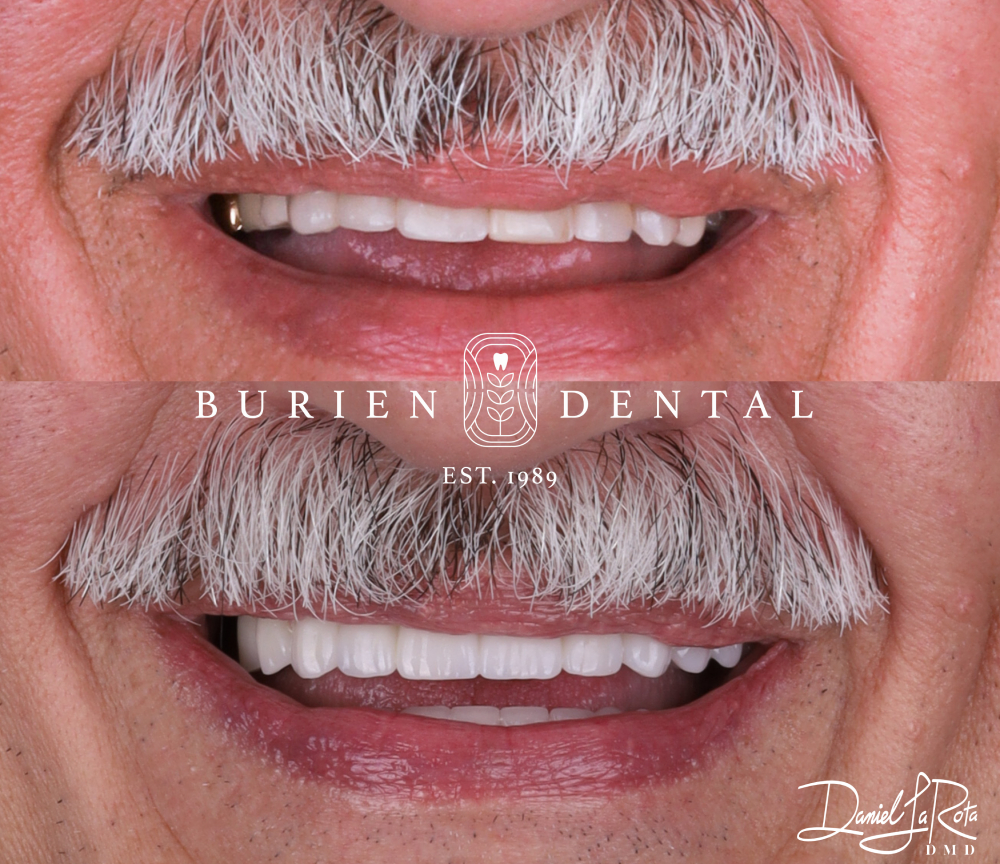
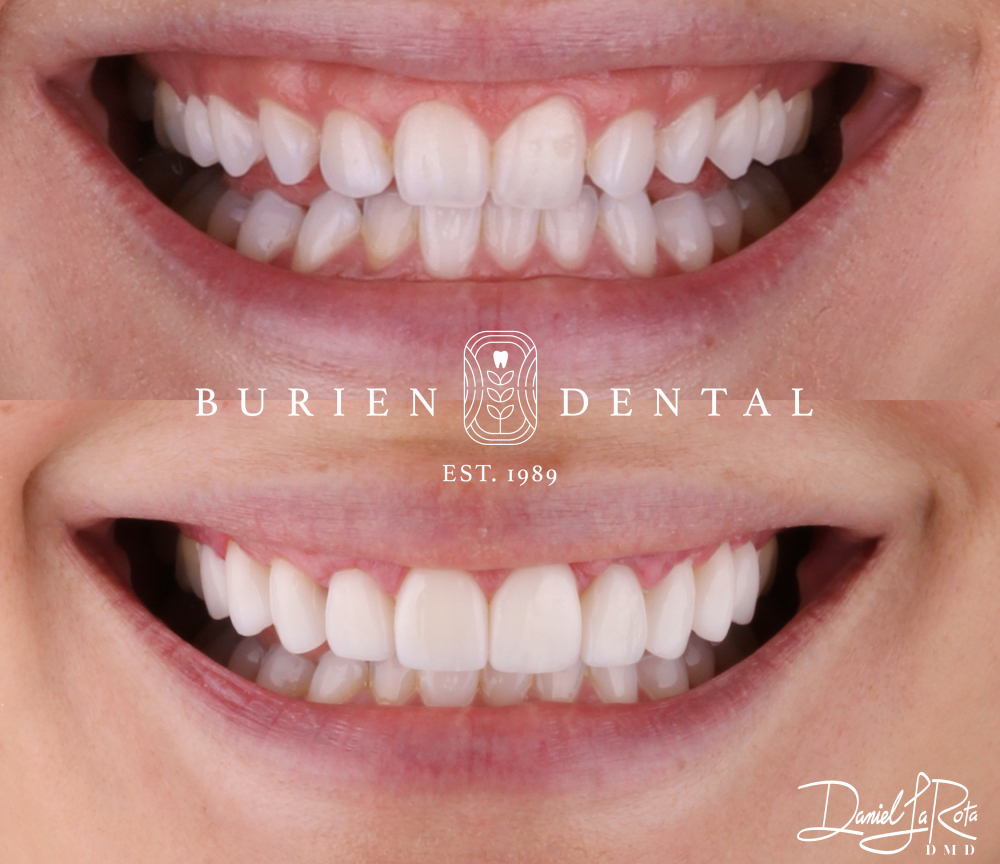
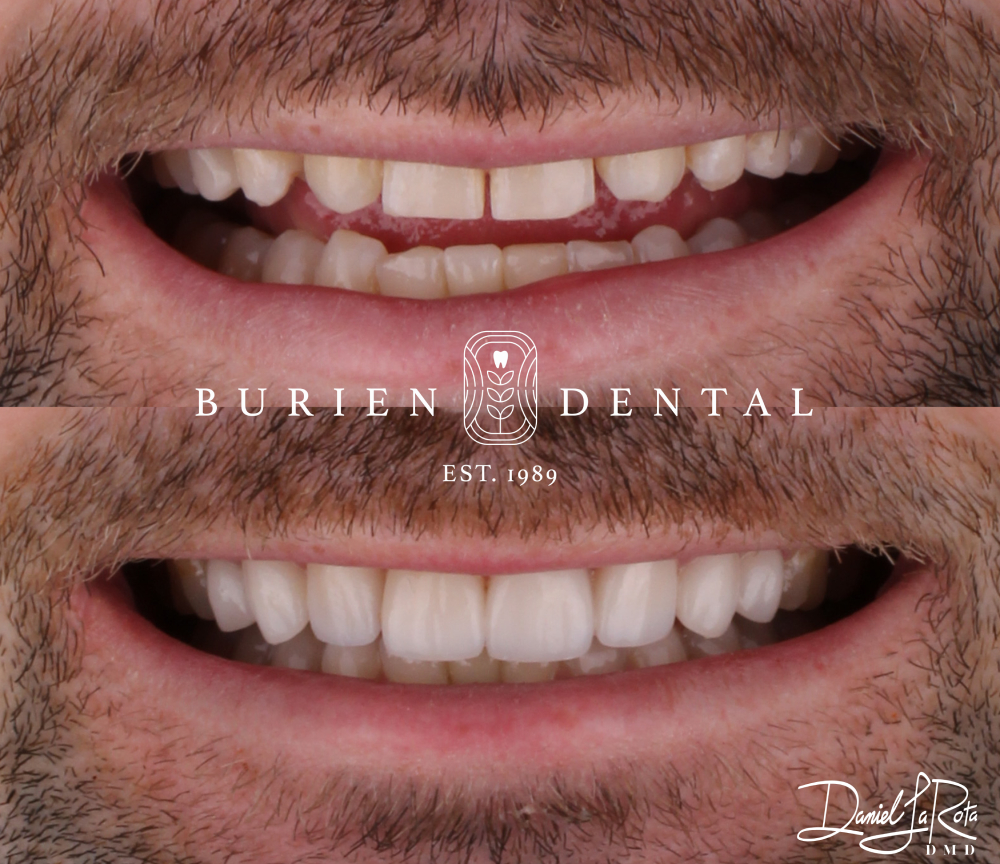
See Our Smile Transformations
Every smile is different, and the right plan depends on your teeth, your bite, and what you want to change. Here are some results from our office. Individual results vary.
How much do porcelain veneers cost in Burien?
Porcelain veneers generally range from $900 to $2,500 per tooth. The final cost depends on the number of teeth involved, the material selected, lab fees, and whether you need other dental care first.
Veneers are usually considered elective treatment, so insurance coverage is often limited. We accept most major dental insurance plans and are preferred providers with Delta Dental, Regence, Premera, Lifewise, and Guardian. Financing is also available through Sunbit and Cherry.
At your consultation, we’ll discuss a conservative plan. That may mean one veneer, several, bonding, whitening, or no cosmetic treatment at all.
Meet Our Burien Dentists

Daniel La Rota, DMD
Dentist | Burien, WA

Jonathan Everett, DDS
Dentist | Burien, WA
Frequently Asked Questions About Porcelain Veneers in Burien, WA
Should I get a veneer or a crown?
A veneer covers the front of a healthy tooth. A crown covers the entire tooth and is usually recommended when a tooth is badly cracked, heavily filled, or structurally weak. We'll examine the tooth before recommending either option.
Are veneers worth it?
For one small chip, bonding is usually more economical. Veneers can make more sense when several front teeth need changes or when whitening and bonding haven't produced the result you want.
Can I get just one veneer?
Yes. Some people only need one. Matching a single veneer to surrounding teeth can be more challenging, so we'll discuss whether that approach will give you the result you want.
Do veneers hurt?
Most people are comfortable with local anesthetic during tooth preparation. Mild hot-and-cold sensitivity afterward is common and usually settles within a few days.
How long does treatment take?
Most veneer cases take two to three visits over about two to four weeks.
How long do veneers last?
Many veneers last around 10 to 15 years. Their lifespan depends on your bite, clenching or grinding habits, oral hygiene, and everyday wear.
Can veneers get cavities?
The porcelain itself can't decay, but the tooth underneath it can. Brushing, flossing, and regular cleanings remain essential.
Can I whiten veneers later?
No. Whitening changes natural enamel, not porcelain. If you plan to whiten your natural teeth, it's usually best to do that before choosing the shade for your veneers.
What if a veneer chips or comes off?
Call us. If the veneer and tooth are intact, we may be able to re-bond it. A chipped veneer often needs to be replaced. Don't try to glue it back yourself.
Talk with our Burien dental team
If you’re considering veneers, our cosmetic dentist in Burien will examine your teeth, explain what treatment would involve, and help you compare veneers with bonding and whitening. The right choice gives you a result you like while protecting as much healthy tooth structure as possible.